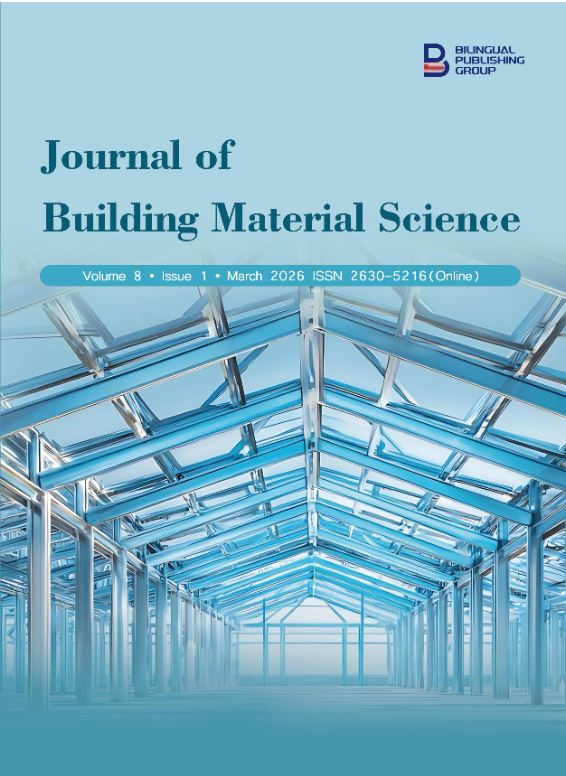
Advanced Materials and Digital Transformation for Sustainable and Resilient Infrastructure

Details
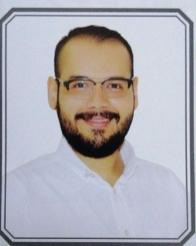
Name: Dr. Mohammad Al-Zu’bi
Affiliation: Department of Civil Engineering, Munib and Angela Masri Faculty of Engineering, Aqaba University of Technology, Aqaba 11947, Jordan
E-Mail: m.alzubi@aut.edu.jo
Website:
https://www.aut.edu.jo/profile/387
https://orcid.org/my-orcid?orcid=0000-0002-8788-5440
Research Interests:
- Sustainable and resilient built environments
- Advanced construction materials and low-carbon material innovation
- Durability, structural performance, and life-cycle optimization of infrastructure
- Fibre-reinforced polymer (FRP) composites
- Nanomaterial-enhanced cement- and epoxy-based bonding systems
- Structural retrofitting, strengthening, and rehabilitation of existing structures
- Structural health monitoring (SHM) and intelligent infrastructure systems
- Safety, risk mitigation, and resilience of construction and infrastructure systems
Research objectives:
-
This Project aims to advance knowledge and practice in the development of sustainable, resilient, and intelligent infrastructure systems, with a particular focus on the integration of advanced materials, innovative strengthening techniques, and digital technologies across the infrastructure lifecycle. Drawing on the complementary expertise of the Academic Lead and Co-Academic Leads, the project seeks to bridge materials innovation, structural performance, and infrastructure management within the context of modern construction challenges.
-
The scope encompasses low-carbon and high-performance construction materials, including fibre-reinforced polymer (FRP) composites, textile-reinforced concrete, stainless steel reinforcement, and nanomaterial-enhanced cementitious and epoxy-based bonding systems, with emphasis on durability, long-term behaviour, and life-cycle optimisation. Contributions addressing structural retrofitting, repair, and rehabilitation of existing infrastructure are particularly encouraged, especially where experimental, numerical, or performance-based design approaches are employed.
-
In parallel, the project highlights emerging trends in structural health monitoring (SHM), robotics, artificial intelligence, and data-driven engineering, including autonomous inspection, AI-enabled safety systems, risk assessment, and hazard mitigation. Studies that integrate construction and facility management, digital transformation, and performance evaluation (e.g., KPI-based frameworks) are also welcomed.
-
Overall, this project aims to provide a multidisciplinary platform for researchers and practitioners to present innovative, scalable, and cost-effective solutions that enhance the safety, durability, sustainability, and resilience of infrastructure systems under evolving environmental and operational demands.
Keywords:
-
Sustainable and resilient infrastructure
-
Advanced construction and building materials
-
Low-carbon and high-performance cementitious composites
-
Fibre-reinforced polymer (FRP) composites
-
Textile-reinforced concrete
-
Nano-enhanced bonding systems
-
Structural retrofitting, repair, and rehabilitation
-
Durability, structural performance, and life-cycle optimisation
-
Structural health monitoring (SHM) and smart infrastructure
-
Robotics and autonomous inspection in construction
-
Artificial intelligence and machine learning in structural engineering
-
AI-enabled safety systems, risk assessment, and hazard mitigation
-
Construction and facility management
-
Performance evaluation and key performance indicators (KPIs)
-
Numerical modelling, experimental testing, and performance-based design
-
Digital transformation and intelligent construction systems
Expected Outcomes:
Academic: Peer-reviewed publications
Co-academic leads:

Dr. Musab Rabi
Affiliation: Department of Civil Engineering, Jerash University, Jerash 26110, Jordan
E-Mail: Musab.rabi@jpu.edu.jo
Website:
Research Interests:
- Structural engineering and advanced construction materials
- Reinforced concrete and steel-concrete composite structures
- Stainless steel reinforcement and durable structural systems
- Structural health monitoring and smart infrastructure
- Robotics and autonomous inspection in construction
- Artificial intelligence and machine learning in structural engineering
- AI-enabled safety systems, risk assessment, and hazard mitigation
- Construction management, facility operation, and performance evaluation (KPIs)
- Numerical modelling, experimental testing, and performance-based design
- Sustainable, resilient, and cost-effective infrastructure
- Digital transformation and intelligent construction and management systems

Dr. Mohammad Alma’aita
Affiliation: Department of Civil Engineering, Faculty of Engineering, Amman Arab University, 11953 Amman, Jordan
E-Mail: m.almaaitah@aau.edu.jo
Website:
Research Interests:
- Textile-reinforced concrete and advanced reinforcement systems
- Low-carbon, resource-efficient, and cost-effective cementitious composites
- Sustainable concrete materials and construction technologies
- Structural performance, durability, and long-term behaviour of concrete systems
- Concrete repair, strengthening, and retrofitting of existing infrastructure